Neurodiversity is an umbrella term that encompasses specific learning differences including Dyslexia, Dyscalculia, Dysgraphia and Dyspraxia as well as Attention Deficit Hyperactivity Disorder (ADHD), Autism and Tic Disorders such as Tourette’s.
It recognises the fact that the neurodivergent individual has a brain that is wired differently in some way to the neurotypical individual. The term attempts to emphasise the positives of this different wiring and recognise the fact that the neurodivergent individual may have many unrecognised talents. It is also an attempt to move away from the idea that these individuals are in some way disabled or have a lower intellect.
The term recognises the fact that these differences often overlap and do not necessarily occur in isolation.
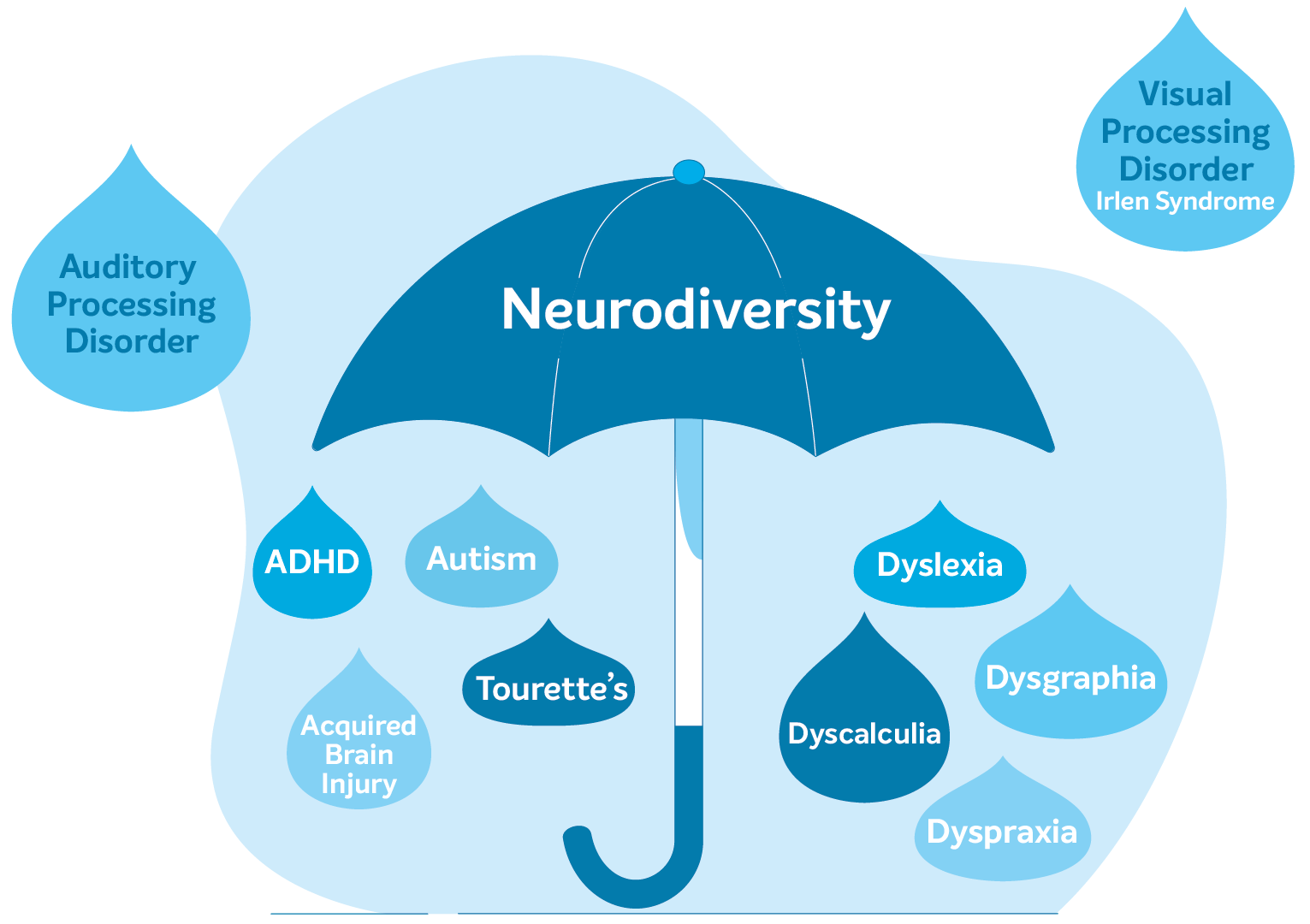
ADHD / Autism / Dyscalculia / Dysgraphia / Dyslexia / Dyspraxia / Processing Disorders / Tourettes Syndrome
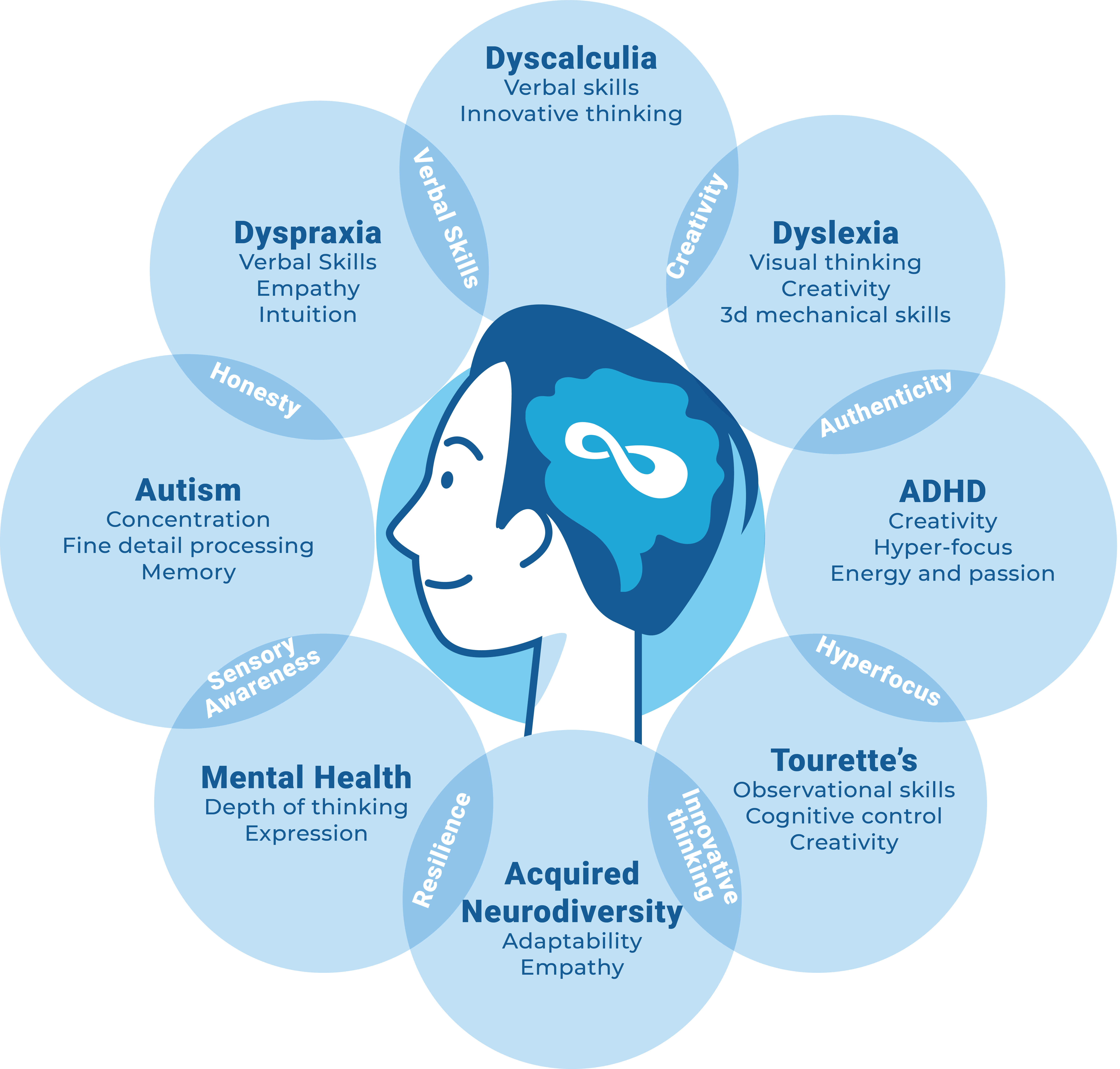
Some of the many benefits of neurodiversity
Based on the work of Mary Colley, Founder of the Charity DANDA (Developmental Adult Neurodiversity Association).
1 in 5 children are neurodivergent
- Studies suggest the rate of mental health problems in people with a learning difference is double that of the general population.
- An estimated 10% of the New Zealand population is dyslexic, yet percentages climb as high as 90% in our prisons.
- About 50% of students with dyscalculia are also likely to have dyslexia.
- Research shows that 80% of children who have reading difficulties also lack the basic visual skills required for reading.
- The school dropout rate of dyslexic students can be as high as 35%, twice as high as the national average of many countries.
IMAGE